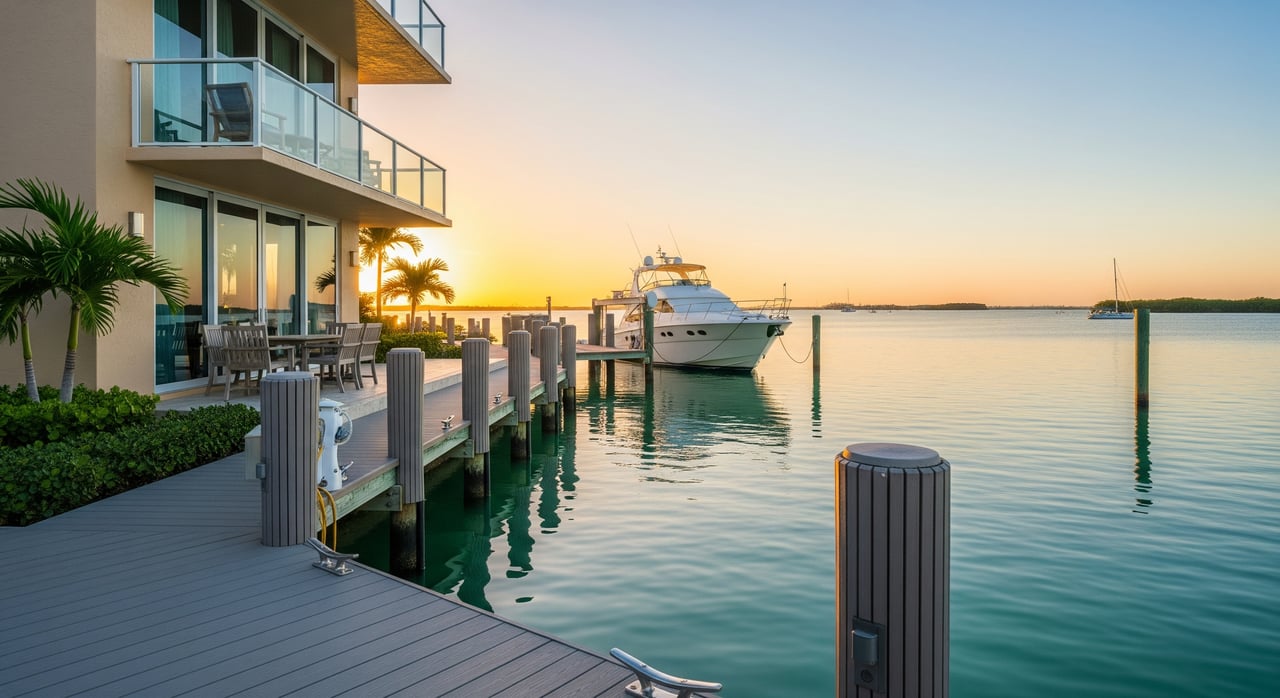
You can step from your waterfront condo to your boat on Longboat Key, Florida, but the details behind that dream matter. Between county lines, HOA rules, and slip specifications, a little due diligence goes a long way. In this guide, you will learn how to confirm whether a slip is deeded or assigned, how to verify fit and depth, what to ask about lifts and insurance, and how to structure a confident offer for a waterfront condo with a boat slip in Florida. Let’s dive in.
Confirm Manatee County location
Longboat Key, Florida crosses two counties, and rules can differ for waterfront real estate and marina infrastructure. Many buildings on the north end sit in Manatee County, while others are in Sarasota County. Always confirm which county governs the property before you rely on public records, permitting guidance, or tax and utility details—especially for waterfront condos and new construction developments in Florida. Check the county listed on the property appraiser’s site and the recorded condominium plat. Town-level requirements may also apply. The Town of Longboat Key’s planning and building offices can clarify any local rules that affect docks, lifts, and vessel operations for waterfront properties in Florida.
Nail down slip ownership
Not all slips mean the same rights, even within the same waterfront condominium community in Florida. You should verify exactly how the slip ties to your unit before you value it or write an offer. A deeded slip appurtenant to a unit is recorded and usually transfers with the condo and may be labeled a limited common element or unit appurtenance in the declaration and plat, which is common in select luxury waterfront condos in Florida. Assigned or marina-managed slips are controlled by the association or operator, may include rules, fees, or waitlists, and are common in both established and new construction waterfront buildings throughout Florida. Guest or transient slips are first-come or limited-use and are not guaranteed for owners. Leasehold slips may exist where an association holds a recorded lease for dock areas or submerged lands, so terms and duration must be confirmed. Ask for the condominium declaration, bylaws, and recorded plat to see how slips are defined. Review the unit deed and a title report to confirm whether a slip is included with the conveyance. Request any recorded leases, easements, or marina operating agreements, and ask the HOA or manager for a written statement of the slip’s status and the current assignment policy, including fees and any waitlist.
Check boat fit and water depth
You want your boat to fit the slip and the approach channel, not just on paper. This is especially important for waterfront condos on Longboat Key, Florida where tidal changes and shoaling can vary. Confirm maximum length overall and beam for the exact slip and how LOA is measured, as some rules count swim platforms, davits, or bowsprits. Verify mean low water depth at the slip and along the access route, ask for recent soundings and dredging history, and pay special attention in older waterfront communities versus new construction marinas in Florida. Review the slip location and orientation on the plat and check for tight turning radii, neighboring pilings, and any fixed bridge constraints on your route to open water. If there is a posted size limit or depth note, get it in writing, and consider having a professional confirm fit at low tide with your boat’s draft and extensions accounted for.
Lift details to confirm
A lift can be a major benefit for waterfront condo owners in Florida, but the details determine whether it works for your vessel and long-term plans. Clarify whether a lift is association-owned or privately owned by the slip holder. If private, confirm it is included in the sale and whether a recorded easement or license covers its footprint and access. Ask for the manufacturer, capacity, and allowable LOA and beam on the lift, along with age, condition, inspection records, and maintenance history. Confirm that required permits exist and are current. If you plan to add or modify a lift, which is common in new construction waterfront condos in Florida, check what approvals are needed at the town, county, state, and federal levels.
Utilities, access, and daily use
Small operational details will shape your day-to-day experience and costs in any waterfront condominium in Florida. Confirm shore power and water availability, pedestal locations, amperage, metering, and billing. Ask about onsite pump-out, lighting, and marina security. Review visitor docking rules, hours of operation, and any restrictions on overnight guests, liveaboards, commercial use, or specific craft types. Request the association’s hurricane procedures, including securement requirements and whether removal is required for certain vessels or lifts during storms.
Insurance, fees, and reserves
Understand who insures what and what you must carry as a waterfront condo owner with a boat slip in Florida. Under Florida’s Condominium Act, the association insures common elements, so confirm whether docks and lifts are covered as common or limited common elements and note deductibles. Most associations require an HO-6 policy and separate marine coverage for your boat with specific liability limits. Check the flood zone and any lender flood insurance requirements, especially for waterfront and new construction properties in Florida. Ask whether there are slip rent charges, marina assessments, or maintenance fees beyond standard HOA dues, and review the reserve study and any planned dock or dredging projects.
Permits and long-term risks
Waterfront infrastructure sits at the intersection of local, state, and federal rules and long-term coastal change in Florida. Docks, pilings, lifts, and dredging may require approvals from the Town of Longboat Key, Manatee County, Florida DEP, and the U.S. Army Corps of Engineers. Sea-level rise, erosion, and storm surge can affect maintenance cycles and costs for waterfront condos in Florida. Confirm channel depths, shoaling trends, and bridge clearances on your route to the bay or Gulf.
Make your offer safer
If the slip is assigned and not deeded, protect your position, especially in competitive waterfront and new construction markets in Florida. Require written confirmation of the slip assignment and HOA transfer approval at closing. If a private lift is included, require documentation for transfer of ownership and recorded access rights. Ask your title company to search for leases, easements, or marina-related encumbrances.
Smart shortlist checklist
Before you make an offer on a waterfront condo with a boat slip on Longboat Key, Florida, confirm building location and governing county, deeded versus assigned slip status, slip specifications for LOA, beam, and depth, lift ownership, capacity, and permits, HOA marina rules and insurance coverage, dredging history and storm procedures, utilities, fees, and any special assessments.
Partner with a local expert
A waterfront condo with a boat slip on Longboat Key, Florida is both a lifestyle upgrade and a technical purchase. The right guidance helps you avoid costly surprises and positions you to secure a property that truly fits your vessel and long-term plans, whether you are considering a classic waterfront building or new construction. If you want a curated list of Manatee-side waterfront condos in Florida with verified slip details, or you are ready to perform due diligence on a specific unit, connect with Monica Verinder for a private consultation tailored to your boating lifestyle.