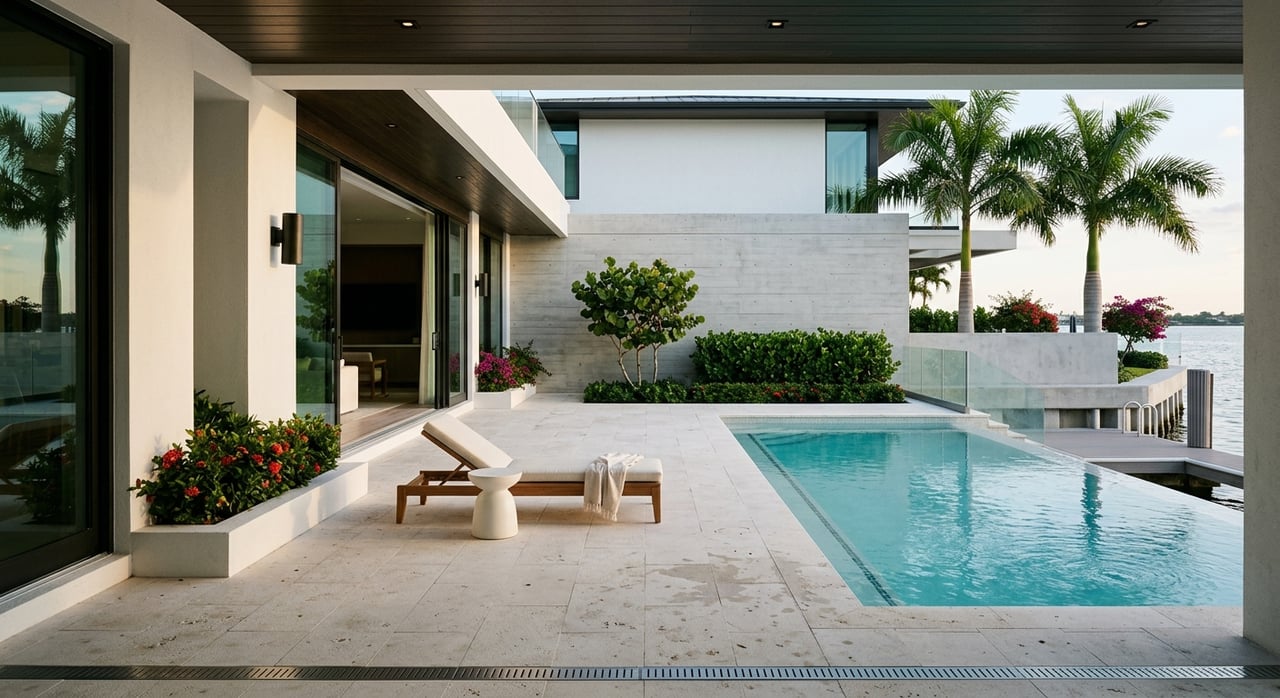
If you are selling a Longboat Key waterfront estate, you are not just listing a home. You are bringing a complex coastal property to a luxury market where buyers pay close attention to price, condition, permits, and flood-related details. When you prepare the right way, you can create more confidence, stronger interest, and a smoother path to closing. Let’s dive in.
Understand the Longboat Key market
Longboat Key is a distinct barrier-island market with a permanent population of about 7,532 that can rise to 20,000 in winter. The town also reports a median age of 71.5 and a median household income of $143,365 in 2023 dollars, which points to an affluent market with many seasonal and second-home owners.
That matters when you sell a waterfront estate. Many buyers are comparing Longboat Key with other coastal luxury options, and some may be shopping from out of state. The island’s location near Sarasota-Bradenton International Airport and Tampa International Airport also helps support that broader buyer reach.
Recent data suggests the market is active, but buyers still expect room to negotiate. In April 2026, sellers of single-family homes received a median 94.3% of original list price in Sarasota County and 94.6% in Manatee County, while Longboat Key trackers showed about 92 days on market and a buyer-leaning environment. For waterfront estates, that means pricing discipline is essential.
Start with your property records
Before your home goes on the market, gather the paperwork buyers are likely to request. On Longboat Key, that often includes records for major upgrades and repairs, especially anything related to the waterfront or storm protection.
Focus on improvements such as:
- Docks
- Seawalls
- Boat lifts
- Roofs
- Windows and doors
- Generators
- Storm-related repairs
The Town of Longboat Key notes that many types of construction, alteration, repair, or equipment replacement require permits and code review. The town also maintains an online permit search, which makes it easier to confirm whether permits were issued and whether any permits are still open.
Why permit history matters
Waterfront buyers tend to be detail-oriented. If your dock, seawall, lift, or hurricane-related work was done with proper approvals, that can help reduce uncertainty during due diligence.
Longboat Key also has specific permit pathways for dock, seawall, and lift work. That signals how closely these features are reviewed locally, and why buyers often ask about them early in the process.
Get ahead of flood questions
On Longboat Key, flood documentation is not optional in a practical sense. The town is a barrier island in a coastal high-hazard area, so buyers often focus on flood, wind, and storm-surge exposure before they focus on finishes or decor.
Florida law requires sellers of residential real property to provide a flood disclosure at or before contract execution. That disclosure includes whether you have filed flood insurance claims or received FEMA assistance, and the law also states that homeowners insurance does not cover flood damage.
Documents to gather before listing
To stay organized and help buyers move faster, assemble:
- Your flood zone information
- Elevation certificate, if available
- Flood insurance history
- Records of any FEMA-related claims or assistance
- Wind mitigation information, if available
Longboat Key also participates in the National Flood Insurance Program and the Community Rating System, which often comes up when buyers ask questions about flood insurance and mitigation. The more complete your file is upfront, the easier it is to answer concerns calmly and clearly.
Price with island-specific comps
One of the biggest mistakes in a luxury waterfront sale is pricing from broad county data alone. Longboat Key has its own price range, buyer expectations, and property characteristics, so your home should be compared with recent island sales that closely match its location and waterfront profile.
That means looking at factors like:
- Open bay, canal, or gulf access
- View corridors
- Dockage and boating utility
- Renovation quality
- Lot position and privacy
- Flood and insurance profile
This matters because county medians do not fully capture Longboat Key’s estate segment. The island has been reported around a $1.15 million median listing price and a $1.3 million median sold price, but premium waterfront homes live in a more specialized tier. Buyers in that tier still negotiate carefully, and Realtor.com reported Longboat Key homes sold about 6.12% below asking on average in March 2026.
What smart pricing does
A well-priced waterfront estate does more than attract clicks. It signals credibility, encourages serious showings, and helps you avoid sitting on the market through multiple buyer cycles.
In a buyer-leaning or negotiable environment, overpricing can weaken your leverage. A polished launch backed by realistic pricing often creates a stronger position than a high starting number followed by repeated reductions.
Time your launch strategically
No one can guarantee the perfect week to list, but Longboat Key’s seasonal population pattern is worth considering. The town says its population can rise from about 7,532 permanent residents to 20,000 in winter, which suggests that certain times of year may bring more eyes to your property.
For a waterfront estate, exposure matters because your buyer may already spend part of the year on the island or nearby. Listing during a period of stronger seasonal presence can help put your home in front of buyers when they are physically in market and actively touring.
That said, timing works best when it supports the full package. A strong launch with complete documentation, excellent presentation, and a clear pricing strategy is usually more important than waiting endlessly for a calendar-based advantage.
Present the property at a luxury level
Luxury buyers often make their first decision online. That is why a waterfront estate needs more than a few attractive photos. It needs a full visual and informational presentation that helps buyers understand the home, the setting, and the lifestyle.
Consumer research from 2025 found that internet-using buyers rated photos, detailed property information, floor plans, virtual tours, and videos among the most useful website features. For a Longboat Key estate, that supports a high-touch approach with polished visuals and clear property details.
Marketing assets that matter most
A concierge-style listing package should typically include:
- Professional photography
- Lifestyle imagery
- Drone or aerial views
- Floor plans
- Virtual tours
- Detailed property descriptions
For waterfront homes, aerial imagery can be especially helpful. It gives buyers context for shoreline position, boat access, neighboring views, and the indoor-outdoor relationship that often drives estate-level interest.
Use staging to support the sale
Presentation is not just about photography. It is also about how the home feels when buyers walk in or view it online.
National staging research found that 29% of agents said staging increased the dollar value offered by 1% to 10%, and 49% said staging reduced time on market. Buyers’ agents also reported that staged homes made it easier for buyers to imagine the property as their future home.
Where to focus staging
The most commonly staged rooms were:
- Living room
- Primary bedroom
- Dining room
- Kitchen
In a Longboat Key waterfront estate, the goal is usually a clean, uncluttered look that highlights natural light, water views, and indoor-outdoor living. You want buyers to notice the setting, the scale, and the ease of the home, not personal items or visual noise.
Prepare for inspection and due diligence
Luxury buyers often move quickly once they are confident in the facts. They also tend to ask sharper questions. On a waterfront property, inspection and due diligence frequently focus on the parts of the home that are hardest and most expensive to replace.
Expect questions about:
- Seawall condition
- Dock and lift condition
- Roof age and permits
- Window and storm protection upgrades
- Flood elevation details
- Prior hurricane or storm repairs
- Open or closed permits
Because Longboat Key spans both Manatee and Sarasota counties, buyers may also ask county-specific questions about taxes, title records, permitting history, and related public records. Having that information organized in advance can help prevent delays and reduce back-and-forth once you are under contract.
Evaluate offers beyond price
In Longboat Key’s luxury market, the best offer is not always the one with the highest headline number. Recent county data shows cash remains a major factor, with cash making up 43.9% of Sarasota County single-family sales and 32.8% in Manatee County in April 2026.
That matters because a clean offer can carry real value. If a buyer is well-prepared, comfortable with the property’s documentation, and ready to close efficiently, that may put you in a stronger overall position than a higher offer with more uncertainty.
Look at the full offer package
When reviewing offers, pay attention to:
- Cash versus financing
- Inspection and due diligence timelines
- Requested contingencies
- Closing timeline
- Buyer comfort with flood and permit records
- Repair expectations
A calm, informed negotiation approach is often the right fit for a Longboat Key estate sale. Buyers at this level usually respond well to clear documentation, reasonable positioning, and steady communication.
Why a concierge strategy helps
Selling a waterfront estate on Longboat Key is a documentation-heavy, presentation-driven process. It requires more than putting a sign in the yard and waiting for the market to do the work.
You need a strategy that combines local coastal knowledge, polished marketing, and disciplined negotiation. When those pieces are aligned, you are in a better position to attract qualified buyers, answer detailed questions, and protect your leverage from listing through closing.
If you are thinking about selling your Longboat Key waterfront estate, personalized guidance can make the process feel far more manageable. For a private, concierge-level strategy built around presentation, pricing, and negotiations, connect with Monica Verinder.
FAQs
What makes selling a Longboat Key waterfront estate different?
- Waterfront estate sales on Longboat Key often involve closer buyer review of flood exposure, permit history, docks, seawalls, lifts, storm-related repairs, and insurance-related details than a typical home sale.
What documents should you gather before listing a waterfront home on Longboat Key?
- You should gather permit records for major improvements, flood zone information, an elevation certificate if available, insurance history, FEMA-related records if applicable, and details about docks, seawalls, lifts, roofs, windows, and generators.
How should you price a Longboat Key waterfront estate?
- You should price from recent Longboat Key luxury and waterfront comparables with similar views, boating features, renovation level, and insurance profile rather than relying only on broad county averages.
When is the best time to sell a Longboat Key waterfront property?
- While no timing guarantees a higher sale price, Longboat Key’s winter population increase may improve exposure because more seasonal residents and second-home owners are on the island.
What do buyers usually ask during due diligence on a Longboat Key waterfront home?
- Buyers commonly ask about flood exposure, elevation, seawalls, docks, lifts, storm protection, roof and window upgrades, prior hurricane repairs, permit status, and county-specific tax or record questions.
Why does marketing matter so much for a Longboat Key luxury listing?
- Luxury buyers often start online, and strong photography, detailed property information, floor plans, virtual tours, and aerial views can help your home stand out and support stronger buyer interest.